 EN
 ES
 FR
 PT

Os viajantes vão por estrada até Conceição de Jacareí, Angra dos Reis ou Mangaratiba e, de lá, atravessam de barca ou flexboat até a ilha.
A maioria desembarca na Vila do Abraão, maior comunidade da Ilha Grande e com estrutura de pousadas, restaurantes, lojas, mercadinho e farmácia.
A escolha do trajeto muda bastante a viagem.
The crossing can take anywhere from 20 minutes to almost 2 hours, cost around R$20 to R$100 per trip, and have either just one departure per day or several options.
This guide brings together all the available options to help you plan your trip.
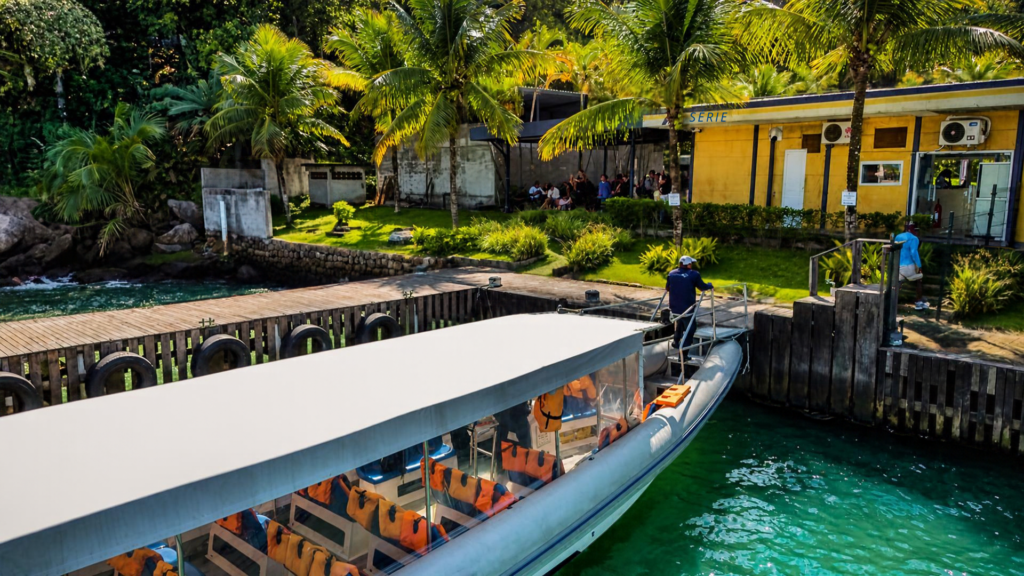
Why You Can Only Reach Ilha Grande by Boat
Ilha Grande belongs to the municipality of Angra dos Reis, on Rio de Janeiro’s Costa Verde. It is approximately 150 km from the city of Rio de Janeiro, 100 km from Paraty, and 400 km from São Paulo.
There are no bridges, airports, or car ferries to the island. Cars are not allowed on the island either: getting around is done on foot, along hiking trails, or by boat. That’s why visitors traveling by car need to leave their vehicles in a parking lot on the mainland, near the departure pier.
Where to Catch Boats to Ilha Grande
There are three main departure points on the mainland, each with its own advantages.
Conceição de Jacareí: The Shortest Crossing
Conceição de Jacareí is a district of Mangaratiba, located along the BR-101 (Rio-Santos) highway, approximately 135 km from Rio de Janeiro. This is where you’ll find the fastest crossing to Vila do Abraão.
-
Time at sea: 15 to 20 minutes by speedboat (flexboat).
-
Departures: Several throughout the day, generally from early morning until late afternoon.
-
Highlight: The Porto Real Marina pier is the most comfortable option and offers parking within the condominium.
Angra dos Reis: More Options and a Longer Crossing
Angra dos Reis is the island’s main gateway and offers the widest range of boat services. Boats depart from three locations in the city center: Cais da Lapa (ferry), Santa Luzia Station (speedboats), and the Tourist Pier.
-
Time at sea: 30 to 40 minutes by speedboat; 1 hour 10 minutes to 1 hour 30 minutes by ferry.
-
Departures: Speedboats run several times a day; the ferry operates once a day.
-
Highlight: The route passes through the bay, where the waters are generally calmer.
-
Also worth noting: This is the most convenient departure point for travelers coming from São Paulo or Paraty.
Mangaratiba: Closest to Rio, Home to the Public Ferry
Mangaratiba is approximately 100 km from Rio de Janeiro, making it the closest departure point to the city. However, it only offers the public ferry service.
-
Time at sea: 1 hour 30 minutes to 1 hour 40 minutes.
-
Departures: Once a day, at 8:00 AM. The return ferry leaves Abraão at 5:30 PM.
-
Important: The route crosses a channel through more open waters, so the boat can get quite bumpy.
-
Highlight: A flexboat service is also available, although with only a few departures per day.
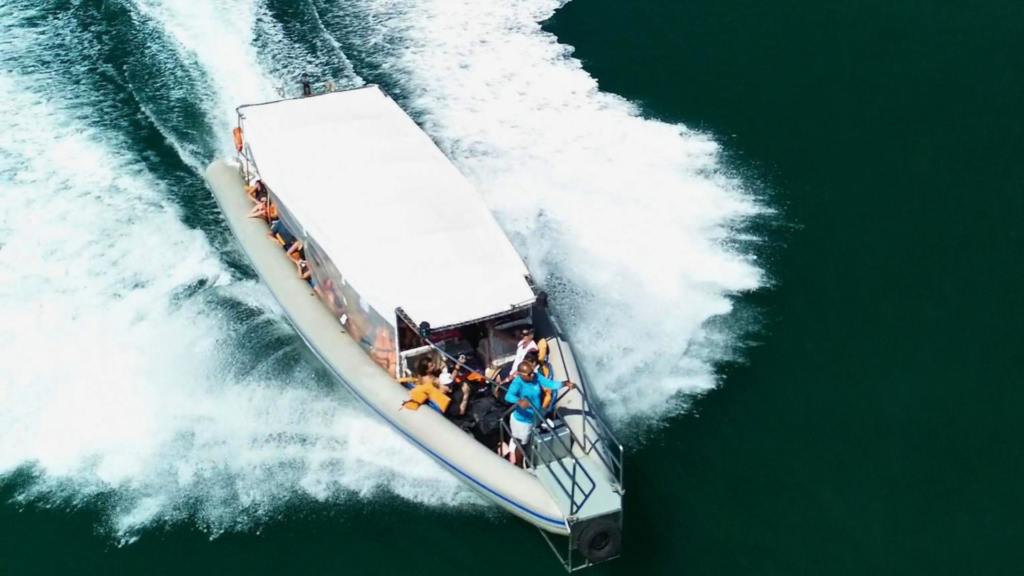
Ferry or Flexboat: What’s the Difference?
The names can be confusing for first-time visitors planning their trip.
-
Ferry: A large public transportation vessel with capacity for hundreds of passengers. It’s the cheapest option, but also the slowest, with only one departure per day in each direction. Since February 2025, the service has been operated by the Barcas Rio consortium, which replaced CCR Barcas.
-
Flexboat: A fast boat with a reinforced inflatable hull and a roof for protection from the sun and rain. It carries 30 to 50 passengers and completes the crossing in just a few minutes.
How to Get to the Departure Pier
Before taking the boat, you’ll need to travel by land. The best route depends on where you’re coming from.
We recommend choosing a transfer service that includes the boat crossing.
From Rio de Janeiro to Ilha Grande
-
By bus: Buses operated by Viação Costa Verde depart from Novo Rio Bus Terminal and head to Angra dos Reis. If you’re traveling via Conceição de Jacareí, ask to get off near kilometer 455 of the BR-101 highway. The journey takes approximately 2 hours. Getting to Angra takes around 3 hours.
-
By car: The route follows Avenida Brasil and then the Rio-Santos highway. Conceição de Jacareí is located before Angra, making the drive shorter.
-
By transfer: Tourist transportation companies offer van services that include the boat crossing. This is the most popular option for travelers arriving by plane who don’t want to rely on public buses.
From São Paulo to Ilha Grande
The most direct route is to Angra dos Reis. There are direct buses from São Paulo, and by car, you can travel via the Via Dutra or the Rio-Santos highway, passing through the northern coast of São Paulo state. Once in Angra, travelers can choose between a speedboat and the ferry.
From Paraty to Ilha Grande
Paraty and Ilha Grande are often included in the same travel itinerary. The available options are:
-
By bus to Angra dos Reis: Buses depart frequently from Paraty Bus Terminal. The journey takes approximately 2 hours, following the coastline. From Angra, you’ll continue by boat.
-
Direct boat: Some companies offer boat trips from Paraty to Ilha Grande, taking approximately 1 hour and 30 minutes. Advance booking is required.
-
By transfer: A van takes you to the pier in Angra, with the boat crossing arranged in advance.
By Car: Where to Park Your Vehicle
Since cars are not allowed on the island, visitors traveling by car need to find parking on the mainland. There are private parking lots near the piers in Conceição de Jacareí, Angra dos Reis, and Mangaratiba, with daily rates. During holidays, covered parking spaces fill up quickly.
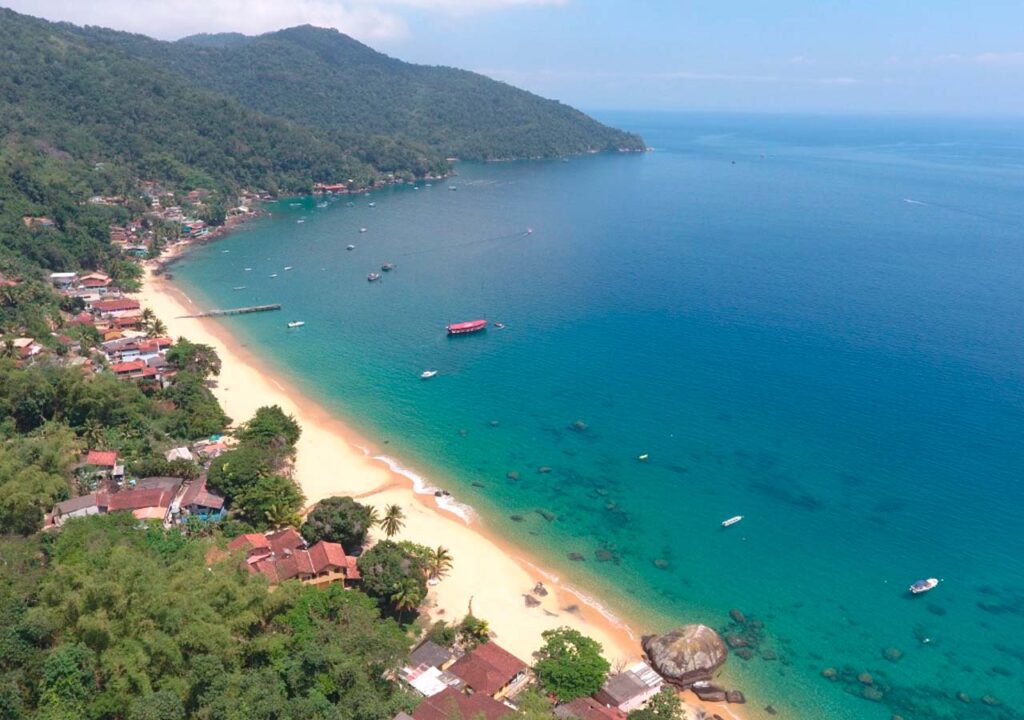
What If You’re Not Staying in Vila do Abraão?
Vila do Abraão has the largest concentration of guesthouses, but it’s not the only place to stay on Ilha Grande. If you’re heading to other beaches, it’s best to take a boat directly from the mainland rather than going to Abraão first and then looking for another boat on the island.
-
Araçatiba and Praia Vermelha: Located on the western side of the island, with boats departing from Angra dos Reis.
-
Bananal, Matariz, Provetá, and Japariz: Served by boats and traditional fishing vessels departing from Angra, although daily departures are not always available.
-
Aventureiro and Palmas: There are no regular boat services; access is usually by privately arranged boat.
Before booking your crossing, it’s worth checking with your guesthouse which departure point is closest.
Is There an Entry Fee for Ilha Grande?
Yes. Since January 2026, Angra dos Reis has charged a Sustainable Tourism Fee, replacing previous environmental preservation, tourism, and boarding fees. The amount varies depending on your destination and length of stay, and is higher for visitors including Ilha Grande in their itinerary.
-
In 2026: A 50% discount applies, bringing the fee to R$47.50 for stays of up to 7 days that include Ilha Grande, plus an additional charge for each extra day.
-
Exemptions: Residents of Angra and their relatives, children up to 12 years old, people over 60, and other eligible groups.
-
Coming years: The discount will decrease in 2027, with full charges scheduled to take effect in 2028.
The fee is being introduced in stages, and the collection rules may still change. Before traveling, visitors should check the latest requirements on the Angra dos Reis City Hall website.
Tips for Your Crossing to Ilha Grande
-
Book in advance: During holidays, weekends, and summer, the most popular departure times sell out quickly. You should also secure your return trip ahead of time so you don’t have to rely on last-minute availability.
-
Arrive early at the pier: Ideally, be at the departure point 20 to 30 minutes before departure, with your ID and ticket ready.
-
Travel light: Boats have limited space, and everything in Abraão is done on foot. Backpacks and small suitcases are easier to manage. Bicycles and surfboards usually incur an additional fee.
-
Check the weather forecast: When the sea is very rough, departures may be canceled for safety reasons, including ferry services.
-
Bring cash and a card: The island has few ATMs, and some smaller businesses still prefer Pix or cash.
-
Getting to your guesthouse: Make sure you know where your accommodation is located. Keep in mind that the walk from the pier to your guesthouse will be along dirt or sandy paths. At Abraão Pier, local porters can transport your luggage to your accommodation for a fee.
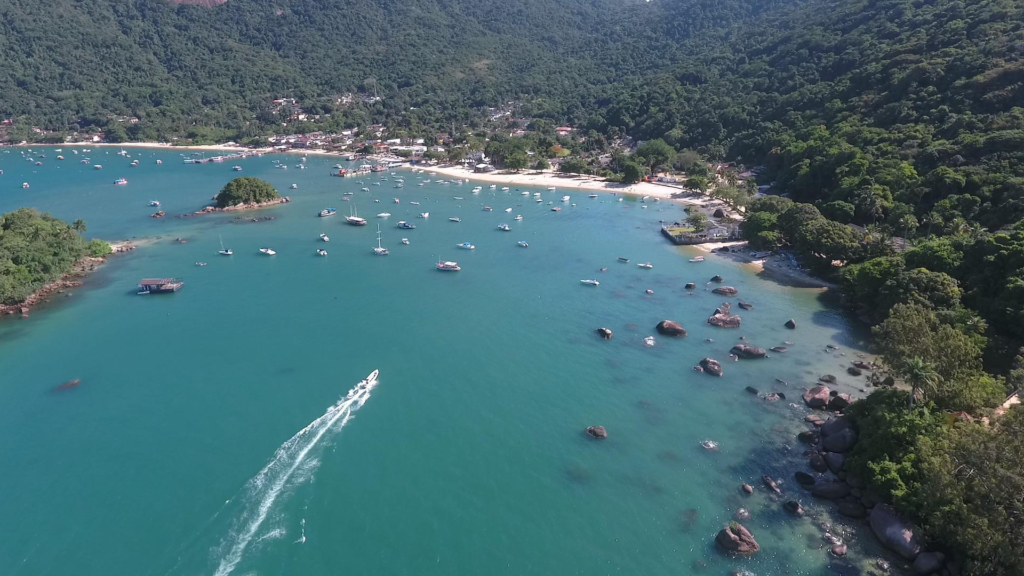
Frequently Asked Questions About Getting to Ilha Grande
What is the fastest way to get to Ilha Grande? Taking a flexboat or speedboat from Conceição de Jacareí, which takes 15 to 20 minutes to reach Vila do Abraão.
What is the cheapest way to get there? Taking the public ferry operated by Barcas Rio, which costs R$20.50 each way and departs from Angra dos Reis or Mangaratiba. There is only one departure per day from each town, and the crossing takes considerably longer.
How long does it take to get from Rio de Janeiro to Ilha Grande? Between 2.5 and 3 hours in total, including the drive to Conceição de Jacareí and the speedboat crossing. Traveling by ferry takes longer.
Can you visit Ilha Grande and return on the same day? Yes. Leave early and take a flexboat, which offers several departure times throughout the day. The ferry only makes this possible via Mangaratiba, with departures at 8:00 AM and a return from Abraão at 5:30 PM.
Which crossing is less bumpy? The route from Angra dos Reis, as it passes through the bay, where the waters are more sheltered.
Can you take a car to Ilha Grande? No. Cars are not allowed on the island, so you’ll need to leave your vehicle in a parking lot on the mainland.